
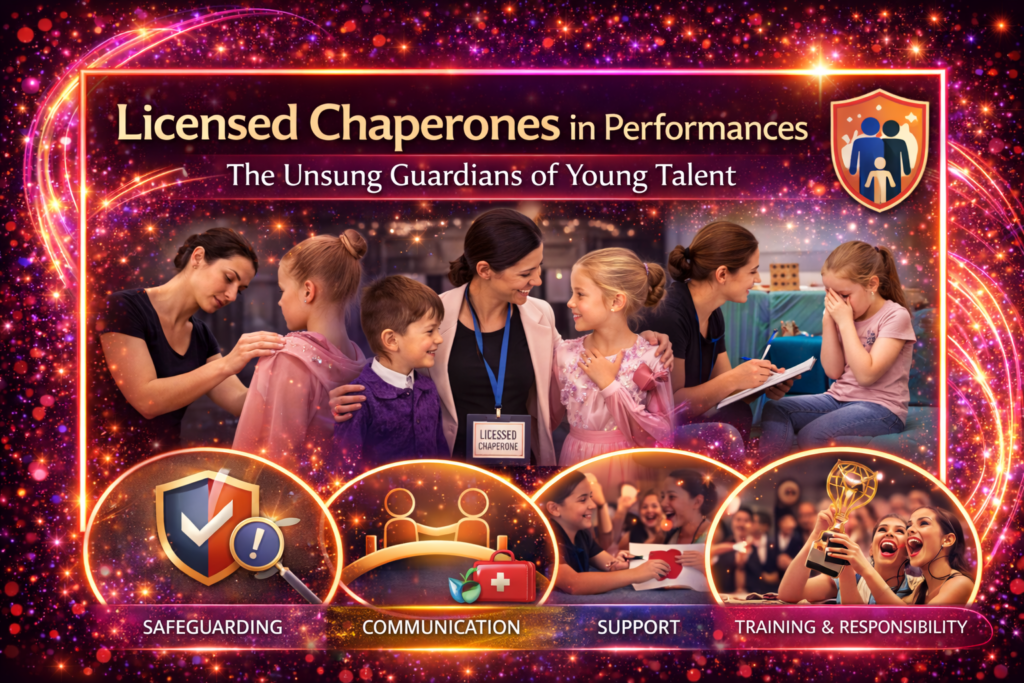
Behind every successful performance featuring children—whether on stage, screen, or in competitions—there is a dedicated professional working quietly in the background: the licensed chaperone. While audiences focus on the performers, licensed chaperones play a vital role in ensuring that young participants are safe, supported, and legally protected throughout their experience.
What Is a Licensed Chaperone?
A licensed chaperone is an adult approved by a local authority to supervise children involved in performances, rehearsals, and productions. In the UK, this role is a legal requirement when children of compulsory school age take part in licensed performances. Chaperones act “in loco parentis,” meaning they take on the responsibilities of a parent during the time the child is in their care.
Safeguarding Comes First
The primary responsibility of a licensed chaperone is safeguarding. This includes ensuring children are safe from harm, both physically and emotionally. Chaperones monitor working conditions, supervise breaks, and ensure that children are not overworked or placed in inappropriate situations.
They are also responsible for making sure that performance regulations are followed—such as limits on working hours, rest periods, and education requirements. If something doesn’t feel right, a chaperone has the authority to step in and advocate for the child.
Supporting Young Performers
Performing can be exciting, but also nerve-wracking—especially for children. Licensed chaperones provide reassurance and emotional support, helping young performers feel calm and confident. From helping with costumes to offering a comforting word before stepping on stage, their presence can make a huge difference.
They also help maintain routines, ensuring children eat properly, stay hydrated, and get enough rest between rehearsals and performances.
A Link Between Adults
Chaperones often act as a bridge between production teams, parents, and children. They communicate important information, raise concerns when necessary, and ensure everyone is aligned on the child’s needs and wellbeing. This coordination helps create a smooth and professional working environment.
Training and Responsibility
Becoming a licensed chaperone involves background checks (such as DBS checks in the UK) and training in safeguarding and child protection. It’s a role that carries significant responsibility and requires vigilance, empathy, and strong communication skills.
Chaperones must be confident enough to enforce rules, yet approachable enough for children to trust and confide in them.
Why Their Role Matters
Without licensed chaperones, many productions involving children simply could not take place legally. More importantly, their presence ensures that young performers can pursue their passions in a safe and structured environment.
They are advocates, protectors, and supporters—ensuring that the spotlight remains a positive and enriching place for children.
Final Thoughts
Licensed chaperones may not take a bow at the end of a performance, but their contribution is invaluable. They work behind the scenes to safeguard young talent, allowing creativity to flourish without compromising wellbeing.
In a world where performance opportunities for children continue to grow, the role of the licensed chaperone remains as essential as ever—quietly ensuring that every young performer is not only seen, but also protected.