
Dance is a space where creativity, confidence, and self-expression can flourish. For many children and young people, it becomes a second home—a place to grow not only as performers, but as individuals. With this opportunity, however, comes a vital responsibility: safeguarding.
Safeguarding in dance is about more than policies and procedures—it’s about creating an environment where every dancer feels safe, respected, and protected.
What Is Safeguarding in Dance?
Safeguarding refers to the measures put in place to protect children and vulnerable individuals from harm, abuse, or neglect. In a dance setting, this includes ensuring physical safety, emotional wellbeing, and appropriate conduct from everyone involved—teachers, staff, volunteers, and even fellow students.
It is a shared responsibility that requires awareness, training, and ongoing commitment.
Why Safeguarding Matters
Dance environments often involve close physical interaction, trust between students and teachers, and time spent in changing rooms or backstage areas. These factors make safeguarding especially important.
When safeguarding is taken seriously:
- Children feel secure and supported
- Parents have confidence in the organisation
- Teachers and staff understand their responsibilities
- Risks are identified and managed effectively
A safe environment allows dancers to focus on learning and enjoying their craft without fear or discomfort.
Key Elements of Effective Safeguarding
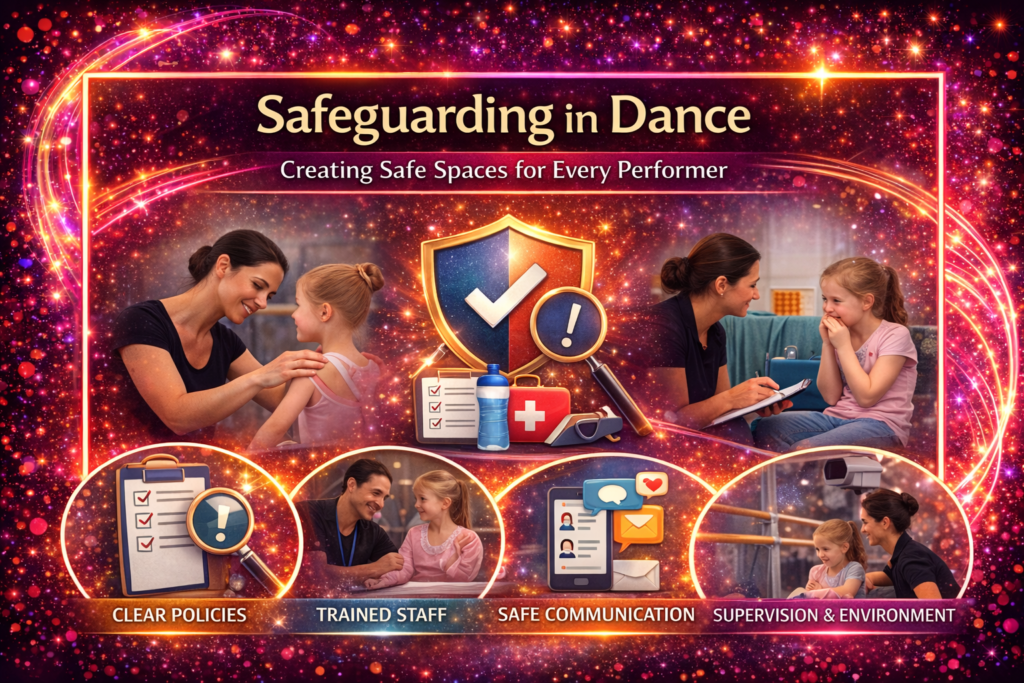
Clear Policies and Procedures
Every dance school or organisation should have up-to-date safeguarding policies. These should outline codes of conduct, reporting procedures, and expectations for behaviour.
Trained Staff
Teachers and staff should receive safeguarding training, including how to recognise signs of abuse or neglect and how to respond appropriately. Knowledge is essential in preventing issues and acting quickly when concerns arise.
Safe Communication
Communication with students—especially outside of class—should be appropriate, transparent, and, where possible, involve parents or guardians. Boundaries must always be clear.
Supervision and Environment
Classes, rehearsals, and performances should be properly supervised. Spaces such as changing rooms should be managed carefully to ensure privacy and safety.
Listening to Young People
Children and young performers should feel heard and taken seriously. Encouraging open dialogue helps them feel confident in speaking up if something doesn’t feel right.
The Role of Teachers and Leaders
Dance teachers and studio leaders are in positions of trust. Their behaviour sets the tone for the entire environment. Professionalism, respect, and clear boundaries are essential.
Teachers should model positive behaviour, avoid favouritism, and ensure that all students are treated fairly and with dignity. They must also be prepared to act if they have concerns, following proper safeguarding procedures.
Parents and Guardians as Partners
Safeguarding is most effective when parents and guardians are involved. Open communication between families and dance organisations helps build trust and ensures that everyone is aligned in prioritising the child’s wellbeing.
Parents should feel comfortable asking questions, understanding policies, and raising concerns if needed.
Creating a Culture of Safety
Safeguarding is not a one-time task—it’s an ongoing culture. It requires regular review, training updates, and a proactive approach to improvement.
When safety becomes part of the everyday mindset, it stops being a checklist and becomes a natural part of how a dance environment operates.
Final Thoughts
Dance has the power to inspire, empower, and transform lives. But for that to happen, safety must always come first.
By prioritising safeguarding, we protect not only the wellbeing of dancers but also the integrity of the art form itself. A safe dancer is a confident dancer—and a confident dancer is free to truly shine.
Because every performer deserves not just a place to dance, but a place where they feel safe enough to be themselves.