
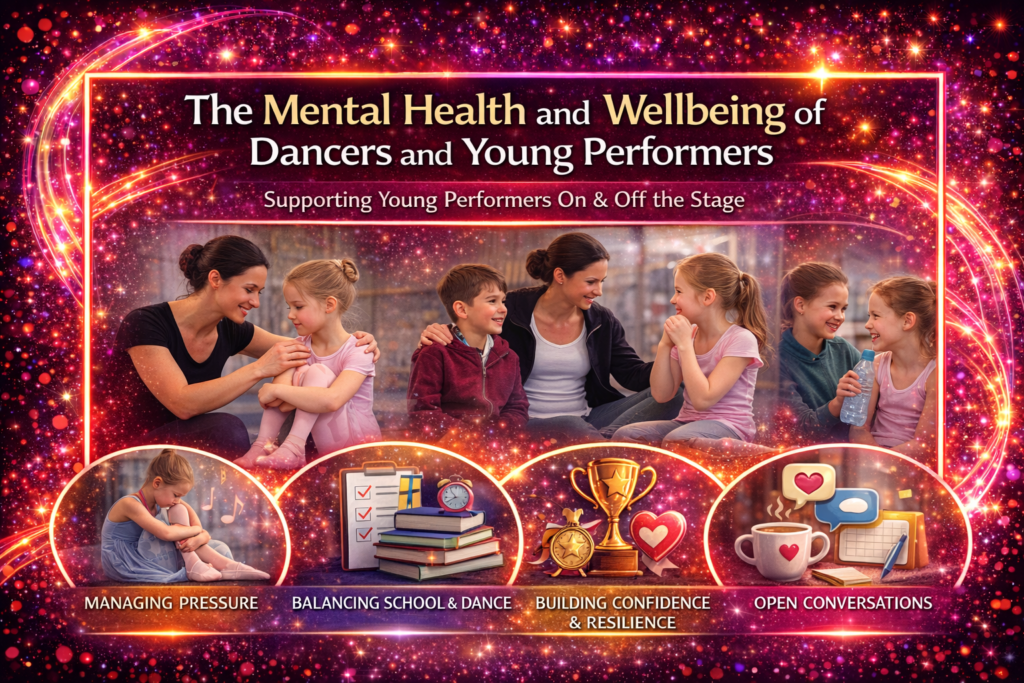
Behind the grace, energy, and confidence seen on stage lies a reality that is often less visible—the mental and emotional challenges faced by dancers and young performers. While the performing arts can be incredibly rewarding, they also come with pressures that can impact wellbeing. Recognising and supporting mental health in this world is not just important—it’s essential.
The Pressure to Be Perfect
Dance and performance are disciplines built on precision, technique, and constant improvement. From a young age, performers are encouraged to strive for excellence. While this can foster discipline and ambition, it can also lead to perfectionism.
Young dancers may feel that they are never “good enough,” constantly comparing themselves to others in class or competition. This pressure can affect self-esteem and create anxiety, especially when mistakes are seen as failures rather than part of the learning process.
Competition and Comparison
Competitions and auditions are a regular part of a performer’s journey. While they provide valuable experience, they also introduce a culture of comparison. Social media can amplify this, with dancers constantly exposed to others’ achievements and highlight reels.
For young performers, this can lead to self-doubt and feelings of inadequacy. It’s important to remind them that every dancer’s journey is unique, and progress cannot be measured solely by trophies or roles.
Balancing School, Training, and Life
Many young performers juggle school, rehearsals, and personal life simultaneously. Long hours and busy schedules can lead to fatigue and burnout. Without proper rest and downtime, both physical and mental health can suffer.
Maintaining a healthy balance is crucial. Time for relaxation, friendships, and non-dance activities helps create a more rounded and resilient individual.
The Role of Teachers and Parents
Teachers and parents play a key role in supporting a dancer’s mental wellbeing. Encouragement, realistic expectations, and open communication can make a significant difference.
Creating an environment where young performers feel safe to express their emotions—whether it’s disappointment after an audition or nerves before a performance—helps them develop emotional resilience.
Positive reinforcement should outweigh criticism, and feedback should focus on growth rather than perfection.
Building Confidence and Resilience
Dance can be a powerful tool for building confidence when approached in a healthy way. Celebrating small achievements, acknowledging effort, and focusing on personal progress can help dancers develop a strong sense of self-worth.
Resilience is also built through challenges—learning to cope with rejection, handling nerves, and continuing after setbacks are all valuable life skills gained through performing.
The Importance of Open Conversations
Mental health should never be a taboo topic in the dance world. Encouraging open conversations helps remove stigma and allows young performers to seek support when needed.
Whether through schools, studios, or professional organisations, providing access to resources and guidance can ensure dancers feel supported both on and off the stage.
Final Thoughts
Dancers and young performers dedicate themselves to their craft with passion and determination. While the spotlight highlights their talent, it’s important to also shine a light on their wellbeing.
By fostering supportive environments, encouraging balance, and prioritising mental health, we can ensure that young performers not only succeed in their art—but thrive as individuals.
Because at the heart of every great performance is not just skill, but a healthy, confident, and supported person.